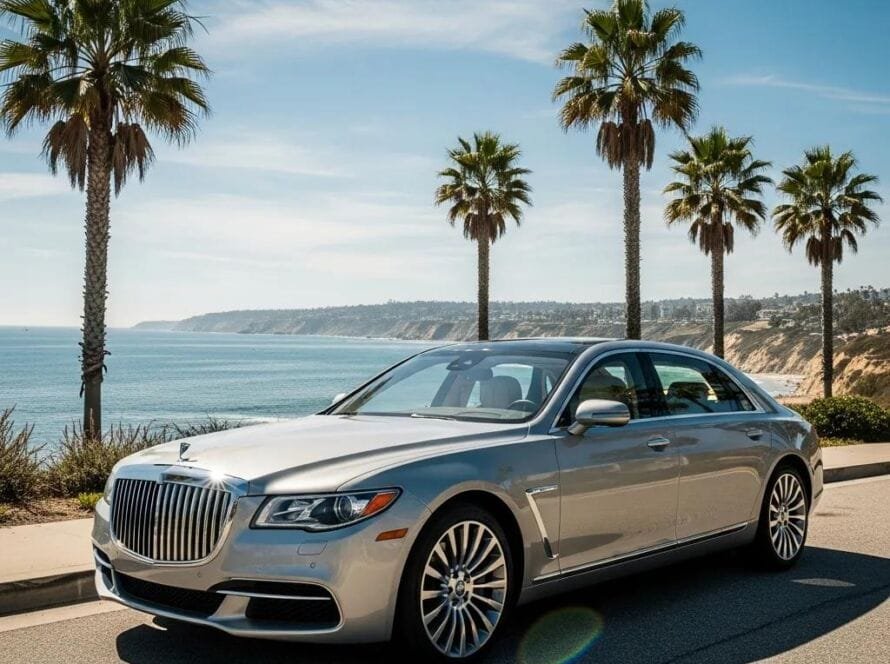
Advanced Technology in Today's Luxury Cars: Exploring Autonomous Driving, Infotainment, AI, and Electrification
The automotive industry is undergoing a remarkable transformation, driven by advanced technology that enhances the luxury driving experience. This article delves into the latest innovations in luxury cars, focusing on autonomous driving systems, infotainment, artificial intelligence, and electrification. Readers will gain insights into how these technologies are reshaping the automotive landscape, improving safety, connectivity, and sustainability. As consumers increasingly seek vehicles that offer cutting-edge features, understanding these advancements becomes essential. This exploration will cover the latest autonomous driving systems, the role of advanced driver assistance systems (ADAS) in safety, innovative infotainment systems, the impact of AI on personalization, and the advances in electrification driving sustainability in luxury vehicles.
What Are the Latest Autonomous Driving Systems in Luxury Cars?
Autonomous driving systems represent a significant leap in automotive technology, enabling vehicles to navigate and operate with minimal human intervention. These systems utilize a combination of sensors, cameras, radar, and artificial intelligence to interpret the driving environment and make real-time decisions. The primary benefit of these technologies is enhanced safety and convenience, allowing drivers to focus on other tasks while the vehicle manages driving functions. As luxury brands invest heavily in this technology, the future of driving is poised for a dramatic shift.
How Do Level 2 and Level 3 Autonomous Driving Features Work?
Level 2 and Level 3 autonomous driving features represent different stages of automation. Level 2, often referred to as partial automation, allows the vehicle to control steering and acceleration but requires the driver to remain engaged and ready to take over at any moment. Examples include adaptive cruise control and lane-keeping assistance. In contrast, Level 3 automation enables the vehicle to handle most driving tasks independently, with the driver only needing to intervene in specific situations. This level is exemplified by systems like Mercedes-Benz’s Drive Pilot, which can manage driving in certain conditions such as congested traffic without driver input, subject to regulatory approval and availability.
Which Luxury Brands Lead in Autonomous Driving Technology?
Several luxury brands are at the forefront of autonomous driving technology. Tesla is widely recognized for its advanced Autopilot system, which offers features like automatic lane changes and traffic-aware cruise control but is classified as Level 2 automation. Mercedes-Benz is also a leader, with its Drive Pilot system showcasing Level 3 capabilities, currently available in limited markets such as Germany. Other notable brands include BMW, which integrates its Driving Assistant Professional, and Audi, known for its innovative Traffic Jam Pilot concept, though the latter has been limited in deployment due to regulatory challenges. These brands are continuously pushing the boundaries of what is possible in autonomous driving, setting the stage for a future where fully autonomous vehicles may become commonplace.
How Do Advanced Driver Assistance Systems Enhance Safety in Luxury Vehicles?
Advanced Driver Assistance Systems (ADAS) play a crucial role in enhancing safety in luxury vehicles. These systems utilize a variety of sensors and technologies to assist drivers in avoiding accidents and improving overall vehicle control. By providing real-time feedback and intervention, ADAS significantly reduces the likelihood of collisions and enhances the driving experience.
What Are the Key ADAS Features in High-End Cars?
High-end cars are equipped with several key ADAS features that contribute to safety and convenience. These include:
- Automatic Emergency Braking: This feature detects potential collisions and applies the brakes automatically to prevent or mitigate an accident.
- Blind Spot Monitoring: This system alerts drivers to vehicles in their blind spots, reducing the risk of lane-change accidents.
- Adaptive Cruise Control: This technology adjusts the vehicle’s speed to maintain a safe distance from the car ahead, enhancing highway safety.
How Do Sensors Like LiDAR and Cameras Support ADAS?
Sensors such as LiDAR and cameras are integral to the functionality of ADAS. LiDAR (Light Detection and Ranging) uses laser beams to create a detailed 3D map of the vehicle’s surroundings, allowing for precise object detection and distance measurement. Cameras complement this by providing visual data that helps identify road signs, lane markings, and other vehicles. Radar sensors are also commonly used to detect objects and measure speed, especially in adverse weather conditions. Together, these sensors enable systems to make informed decisions, enhancing the vehicle’s ability to navigate complex environments safely. The synergy between these technologies is crucial for the effective operation of ADAS, making them indispensable in modern luxury vehicles.
Indeed, the integration of various sensors, particularly camera-radar fusion, is recognized as a key technological trend for future advanced driver assistance systems.
ADAS Safety: Camera-Radar Fusion for Reliable Advanced Driver Assistance
ABSTRACT: AbstractDriven by the mandated adoption of advanced safety features enforced by governments around the global as well as strong demands for upgraded safety and convenience experience from the consumer side, the automotive industry is going through an intensified arms race of equipping vehicles with more sensors and boosted computation capacity. Among various sensors, camera and radar stand out as a popular combination offering complementary capabilities. As a result, camera radar fusion (or CRF in short) has been regarded as one of the key technology trends for future advanced driving assistant system (ADAS). This paper reports a camera radar fusion system developed at TI, which is powered by a broad set of TI silicon products, including CMOS radar, TDA SoC processor, FPD-Link II/III SerDes, PMIC, and so forth. The system is developed to not only showcase algorithmic benefits of fusion, but also the competitiveness of TI solutions as a whole in terms of coverage of capabilities, bal
Camera radar fusion for increased reliability in ADAS applications, Z Zhong, 2018
What Are the Most Innovative Infotainment and Connectivity Systems in Luxury Cars?
Infotainment systems in luxury cars have evolved significantly, offering advanced connectivity and entertainment options that enhance the driving experience. These systems integrate various technologies to provide seamless access to navigation, music, and communication, ensuring that drivers and passengers remain connected and entertained on the road.
How Do Systems Like Mercedes-Benz MBUX and BMW iDrive Compare?
Mercedes-Benz’s MBUX (Mercedes-Benz User Experience) and BMW’s iDrive are two of the most advanced infotainment systems available in luxury vehicles. MBUX features a voice-activated interface that allows users to control navigation, media, and vehicle settings with natural language commands. In contrast, BMW’s iDrive offers a more traditional interface with a rotary controller, touchscreen, and voice recognition. Both systems provide extensive connectivity options, including smartphone integration and real-time traffic updates, but MBUX’s intuitive voice control and AI-based learning capabilities set it apart in user-friendliness.
What Role Does 5G and Smartphone Integration Play in Connectivity?
The advent of 5G technology is revolutionizing connectivity in luxury vehicles. With faster data transfer speeds and lower latency, 5G enables real-time updates for navigation, traffic conditions, and entertainment options. Additionally, smartphone integration allows drivers to access their favorite apps directly through the vehicle’s infotainment system, enhancing convenience and usability. This integration not only improves the overall driving experience but also ensures that drivers remain connected to their digital lives while on the road.
How Is Artificial Intelligence Transforming Luxury Car Personalization and Maintenance?
Artificial intelligence (AI) is playing a transformative role in the personalization and maintenance of luxury vehicles. By leveraging data and machine learning algorithms, AI enhances the driving experience by tailoring features to individual preferences and predicting maintenance needs.
What AI-Driven Features Enhance User Experience in Luxury Cars?
AI-driven features in luxury cars include personalized driver profiles that adjust seating, climate control, and infotainment settings based on individual preferences. Additionally, AI can analyze driving patterns to suggest optimal routes and driving styles, enhancing comfort and efficiency. These features create a more enjoyable and customized driving experience, allowing luxury car owners to feel more connected to their vehicles.
How Does Predictive Maintenance Improve Vehicle Reliability?
Predictive maintenance utilizes AI to analyze data from various vehicle sensors, identifying potential issues before they become serious problems. By monitoring factors such as engine performance and fluid levels, the system can alert drivers to necessary maintenance, reducing the risk of breakdowns and enhancing vehicle reliability. This proactive approach not only saves time and money but also ensures that luxury vehicles remain in optimal condition, providing peace of mind for owners.
Further emphasizing the critical role of AI, research highlights its transformative impact on streamlining manufacturing processes and enhancing predictive maintenance for autonomous vehicles.
AI in Automotive: Enhancing Autonomous Driving & Vehicle Intelligence
Integration of Artificial Intelligence (AI) into the automobile sector represents a transformative force reshaping the automotive industry landscape. Al is catalyzing a paradigm shift in streamlining manufacturing processes and predictive maintenance of autonomous vehicles. The synthesis of AI and automotive technologies is not merely a luxury but a strategic necessity, asserting itself as an indispensable driver for progress and competitiveness in the evolving automotive landscape. Increasing vehicle system intelligence, allowing vehicles to detect pedestrians, identify lanes and stop signs, and make judgments using algorithmic analysis of information from cameras and sensors are some of their main goals.
Artificial Intelligence-Based Predictive Maintenance Approaches for Vehicle Condition Monitoring and On-Board Diagnostic Systems to Enhance Automotive …, R Raffik, 2025
What Advances Are Driving Electrification and Sustainability in Luxury Vehicles?
Electrification is a key trend in the luxury automotive sector, driven by the need for sustainability and reduced environmental impact. Luxury brands are increasingly investing in electric powertrains and sustainable materials to meet consumer demand for eco-friendly vehicles.
Which Electric Powertrain Technologies Define Luxury EVs?
Luxury electric vehicles (EVs) are defined by advanced powertrain technologies that enhance performance and efficiency. Key technologies include:
- Battery Electric Vehicles (BEVs): These vehicles are powered entirely by electric batteries, offering zero tailpipe emissions and high efficiency.
- Plug-in Hybrid Electric Vehicles (PHEVs): PHEVs combine an internal combustion engine with an electric motor, providing flexibility and extended range.
- Fuel Cell Electric Vehicles (FCEVs): FCEVs use hydrogen to generate electricity, offering quick refueling times and zero tailpipe emissions.
How Are Sustainable Materials and Manufacturing Shaping Luxury Interiors?
Sustainability in luxury vehicles extends beyond powertrains to include the materials used in vehicle interiors. Manufacturers are increasingly utilizing sustainable materials such as recycled plastics, organic textiles, and responsibly sourced wood. This shift not only reduces the environmental impact of vehicle production but also appeals to consumers who prioritize eco-friendly practices. As luxury brands embrace sustainable manufacturing processes, the interiors of these vehicles are becoming more environmentally conscious while maintaining the high standards of luxury and comfort expected by consumers.
This commitment to sustainability in luxury interiors is further underscored by ongoing research into eco-friendly materials and circular design strategies.
Sustainable Luxury: Eco-Friendly Materials for Automotive Interiors
As sustainability becomes a strategic priority across the automotive industry, the development and integration of eco-friendly materials for vehicle interiors are gaining unprecedented momentum. This paper investigates current trends, key challenges, and circular design strategies that are shaping the transition toward sustainable interior components. Emphasis is placed on the adoption of natural fiber composites, recycled plastics, bio-based polymers, and emerging alternatives such as mycelium-based and biodegradable materials. The study further explores end-of-life considerations, design-for-disassembly principles, and policy frameworks such as the EU Green Deal and Extended Producer Responsibility. While the shift toward sustainable materials offers clear environmental advantages, challenges remain in terms of cost, scalability, and standardization. Through a synthesis of market projections, industry practices, and innovative case studies, this research highlights how
Sustainable Materials for Automotive Interiors Trends, Challenges, and
Circular Design Strategies, N Uysal, 2025
What Emerging Technologies Will Shape the Future of Luxury Car Innovation?
The future of luxury car innovation is being shaped by emerging technologies that promise to redefine the driving experience. As the automotive industry continues to evolve, staying ahead of these trends is essential for manufacturers and consumers alike.
How Will Augmented Reality and Quantum Computing Impact Luxury Cars?
Augmented reality (AR) is set to revolutionize the way drivers interact with their vehicles. By overlaying digital information onto the real world, AR can enhance navigation, provide real-time data about the vehicle’s surroundings, and improve safety. Meanwhile, quantum computing holds the potential to optimize complex systems within vehicles, from energy management to autonomous driving algorithms. While still in early stages, as these technologies mature, they will likely play a significant role in the next generation of luxury vehicles.
What Challenges and Opportunities Lie Ahead for Luxury Automotive Tech?
The luxury automotive sector faces several challenges as it navigates the rapid pace of technological advancement. Issues such as cybersecurity, regulatory compliance, and the need for infrastructure to support electric vehicles present hurdles that manufacturers must overcome. However, these challenges also present opportunities for innovation, as companies that successfully address these issues can gain a competitive edge in the market. By embracing new technologies and adapting to changing consumer preferences, luxury brands can continue to thrive in an increasingly complex automotive landscape.
| Technology | Description | Impact Level |
|---|---|---|
| Autonomous Driving | Systems that enable vehicles to operate with minimal human intervention | High |
| Advanced Driver Assistance Systems | Features that enhance safety and driving convenience | Medium |
| Infotainment Systems | Integrated systems providing entertainment and connectivity | High |
| Electric Powertrains | Technologies powering electric and hybrid vehicles | High |
Luxury vehicles are at the forefront of technological innovation, integrating advanced systems that enhance safety, connectivity, and sustainability. As the industry continues to evolve, understanding these advancements is crucial for consumers seeking the best in automotive technology.